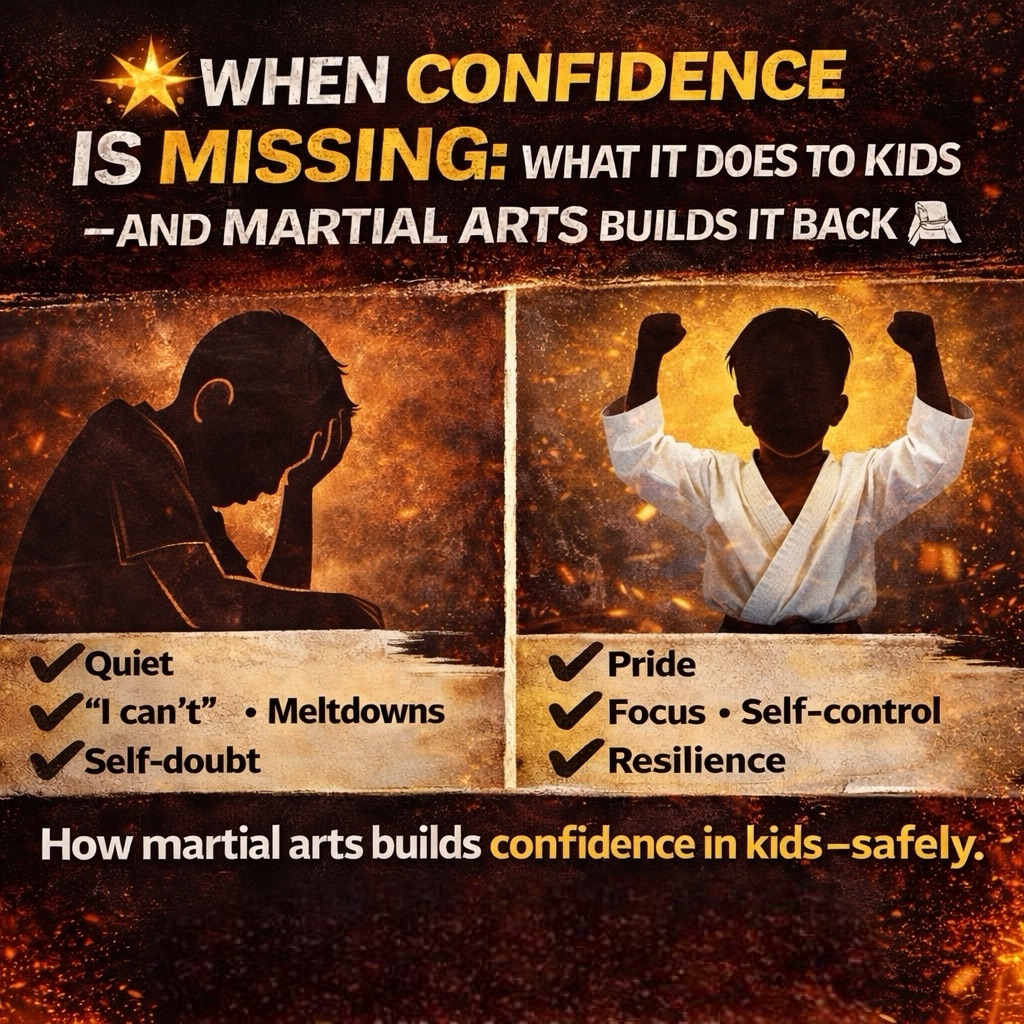
🌟 When Confidence Is Missing: What It Does to Kids—and Why Martial Arts Builds It Back 🥋
Confidence isn’t “being loud.” It’s not acting tough. Real confidence is a child quietly believing: “I can handle this.” 💪
When a kid has that belief, they try new things, bounce back from mistakes, speak up when something’s wrong, and walk into school with stronger posture—inside and out. ✅
When confidence is missing, life gets harder in ways parents feel every day: at home 🏠, in school 🏫, and in friendships 🧑🤝🧑.
This article breaks down:
✅ the real pain points parents see ✅ the symptoms that show up when confidence is low ✅ why it matters long-term ⏳ ✅ and how martial arts is one of the most reliable ways to rebuild confidence—safely, step-by-step 🥋
💔 The hidden cost of low confidence in kids
Low confidence doesn’t always look like sadness 😔. Sometimes it looks like:
avoiding 🙈 acting out 😤 shutting down 😶 or overreacting 😭
A child who doesn’t believe in themselves will often protect themselves the only way they know how: by escaping (avoiding), controlling (bossing), or defending (anger). ⚠️
And it can quietly shape how they see themselves for years. 🧠
🌱 Why this is so important
Because confidence affects everything:
how a child learns 📚 how they communicate 🗣️ how they handle pressure 🧩 how they respond to bullying 🚫 how they make friends 🤝 and how they build identity 🧭
Confidence is the foundation for resilience. 💛
😟 The pain points parents notice first
If you’re reading this, you may have seen some of these already:
🏠 At home
Your child gives up quickly: “I can’t.” 😣 Small corrections lead to big emotions 😭 They avoid new activities, foods, places 🙅 They melt down when things don’t go their way 🌪️ They constantly seek reassurance: “Did I do it right?” 🥺
🏫 At school
They don’t raise their hand (even when they know the answer) ✋⬇️ They freeze during tests or presentations 🧊 They struggle to focus because they’re anxious about messing up 😰 They get labeled as “lazy,” “distracted,” or “unmotivated” 😔—when it’s really fear
🧑🤝🧑 Socially
They follow the crowd to avoid standing out 🫥 They tolerate disrespect because they don’t know how to set boundaries 🚧 They get picked on… or they become the kid who picks on others 😢 They feel left out, awkward, or “not good enough” 💔
🔎 Common symptoms of low confidence in kids (what it looks like)
Low confidence often shows up as patterns—not one-off moments.
😔 Emotional symptoms
Frequent worry or fear of embarrassment 😳 Big reactions to small problems 😭 Sensitivity to criticism 🧨 Shame after mistakes 😣 Perfectionism (“If I can’t do it perfectly, I won’t do it.”) 🎯
🚶 Behavioral symptoms
Quitting quickly 🏳️ Avoiding challenges ⛔ Acting silly to cover insecurity 🤪 Lying to avoid consequences 🤥 Anger or defiance (often a mask for fear) 😡
🧍 Social symptoms
Trouble making friends 😞 People-pleasing 🙋♀️🙋♂️ Weak boundaries (“Okay… fine… whatever…”) 🫤 Fear of speaking up 😶 Getting pulled into the wrong crowd for acceptance ⚠️
💤 Physical / school-related symptoms
“Stomach aches” before school 🤢 Trouble sleeping 🌙 Headaches, tension 😣 Increased screen time / withdrawal 📱 Falling behind because they stop trying 📉
If any of this feels familiar, you’re not alone—and your child isn’t “broken.” ❤️
They’re simply missing a system that trains confidence the way we train muscles: little reps, consistent practice, safe challenge. 💪✅
🚫 Why “just telling them to be confident” doesn’t work
Most kids don’t become confident by hearing motivational speeches 🎤. They become confident through evidence.
Confidence is built when a child repeatedly experiences:
challenge 🧗 effort 🧠 progress 📈 success 🏆 recognition 🌟 belonging 🤝
That’s exactly why martial arts works so well. 🥋
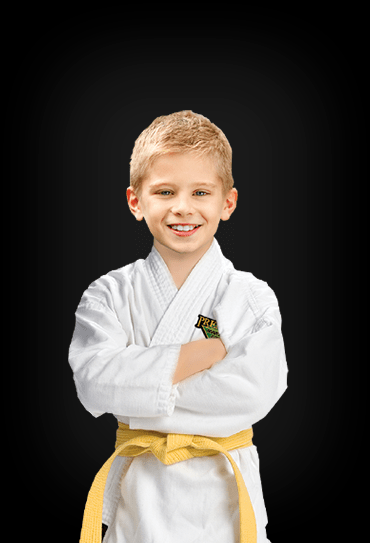
🥋 How martial arts rebuilds confidence (and why it works when other things don’t)
1️⃣ Martial arts gives kids “proof” they are capable ✅
A child learns a stance. Then a punch. Then a combination. Then control. Then timing.
Each small skill becomes proof: “I can learn hard things.” 💥
2️⃣ Kids learn to fail safely and recover 🔁
In martial arts, mistakes are normal. Forgetting a technique isn’t shame—it’s part of training.
Kids get comfortable with: try ➜ miss ➜ adjust ➜ improve ✅
3️⃣ Clear structure replaces chaos 🧱
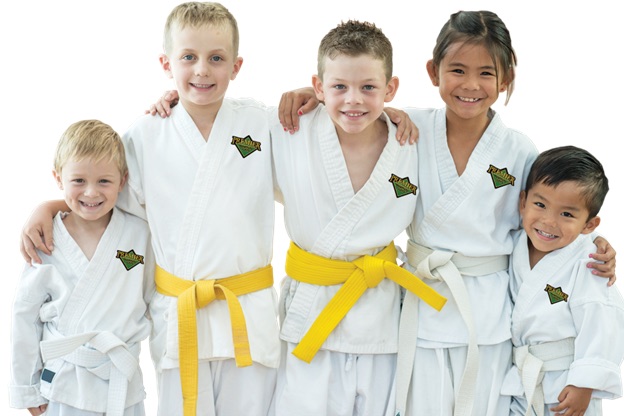
Martial arts provides structure:
line up 🧍♂️🧍♀️ listen 👂 follow direction 🧭 earn progress 🥇
Structure helps anxious kids feel safe and helps distracted kids focus. 🎯
4️⃣ Confidence is trained through posture and voice 🧍🗣️
Martial arts teaches:
strong stance 🦵 confident eye contact 👀 respectful but firm voice 🗣️✅
This alone can change how kids are treated. 💡
5️⃣ Boundary-setting becomes natural 🚧
Kids learn:
when to speak up ✋ how to say “Stop” 🛑 how to create space ↔️ how to stay calm under pressure 🧘
6️⃣ Kids belong to something positive 🤝💙
Confidence also comes from identity:
“I’m part of a team. I’m improving. I’m a martial artist.” 🥋✨
7️⃣ Progress is visible—and celebrated 🎖️
Belts, stripes, and skills are tangible wins.
That success leaks into everything:
schoolwork 📚 friendships 🤝 behavior at home 🏠 self-control 🧠
✅ Martial arts is a “safe challenge” (not chaos)
Parents sometimes worry: Is martial arts too aggressive? 🤔
In a well-run kids program, it’s the opposite. Kids learn:
control before power 🧠 respect before sparring 🙏 discipline before intensity ✅
Good training builds calm confidence—not aggression. 🌿
🌟 The bottom line: confidence changes a child’s future
A confident child is more likely to:
try harder in school 📈 bounce back from stress 💪 choose healthier friendships 🤝 speak up against bullying 🛡️ regulate emotions 🧘 grow into a stable, strong adult 🧍♂️🧍♀️
Confidence isn’t luck. It’s built through consistent training, positive pressure, and supportive coaching. 🥋❤️
🎁 Get the free guide: “10 Parent Tips to Boost Your Child’s Confidence at Home”
Want simple strategies you can use immediately (even before your child starts training)? ✅
Download the free PDF here:
 Kai Next Level Mixed Martial Arts